Magnetic processing technology
Magnetic processing technology
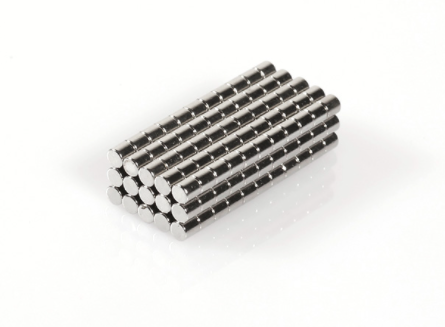
Magnet materials as the latest result of the development of rare earth permanent, magnetic materials are called "Best Magnetic" due to their excellent magnetic properties. The magnetic material is an alloy of neodymium, iron oxide, etc. They are also called a magnet. Magnetic has a very high coercive force.
At the same time, the advantages of high density make permanent magnet materials widely used in modern industry and electronic technology to make the instruments, electroacoustic motors, magnetic separation, and magnetization equipment miniaturized. It is possible to reduce the weight and thickness.
The advantages of magnets are high-cost performance and best
mechanical performances; the disadvantages are that the Curie temperature point is low, and it is easy to be pulverized. It must be improved adjusting its chemical composition and surface treatment methods. Meet the requirements of practical applications.
The third-generation rare earth permanent magnet is the most powerful permanent magnet among contemporary magnets. Its main raw materials are rare earth metal neodymium 29%-32.5%
metallic element iron 63.95-68.65%
non-metallic element boron 1.1-1.2%
with a small amount of dysprosium 0.6- 1.2%
niobium 0.3-0.5%
aluminum 0.3-0.5%
copper 0.05-0.15% and other elements.
The permanent magnet material is a permanent magnet material based on the intermetallic compound RE2FE14B. Main components are rare earth (Re), iron (Fe), and boron (B). Among them, rare earth ND can be partially replaced by other rare earth metals such as dysprosium (Dy) and praseodymium (Pr) to obtain different properties. Iron can also be partially replaced by other metals such as cobalt (Co) and aluminum (Al). The boron content is small, but it plays an essential role in forming tetragonal crystal structure intermetallic compounds, making the compounds have high saturation magnetization, high uniaxial anisotropy.
Process flow: batching → smelting ingot making / stripping → powder making → pressing → sintering and tempering → magnetic testing → grinding → pin cutting → electroplating → finished product. Among them, the ingredients are the basis, and the sintering and tempering are the keys.
Magnet blank performance testing tools: melting furnace, strip furnace, jaw crusher, jet mill, press molding machine, vacuum packaging machine, isostatic press, sintering furnace, heat treatment vacuum furnace, magnetic property tester, Gaussian count.
Magnet machining tools: centerless grinding, sermonizing machine, double-end grinding, flat grinding, slicer, double-sided grinding, wire cutting, Tianjin high-speed, Xihu table drilling, special-shaped grinding, etc.


评论
发表评论